
Hard Flaccid Syndrome
Treatment/Recovery
Hard Flaccid Syndrome Recovery:
Can You Recover From Hard Flaccid?
For many men, developing hard flaccid syndrome (HFS) can feel overwhelming and deeply confusing. The sudden appearance of symptoms such as persistently firm flaccid penis, pelvic discomfort, numbness, erectile dysfunction, or urinary issues often creates significant fear and uncertainty — especially when standard medical tests appear normal. one of the first questions most individuals ask is: “Can hard flaccid syndrome be cured?” or “Is recovery from HFS possible?”
Although there is currently no universally established medical cure for hard flaccid syndrome, many individuals report meaningful improvement or significant recovery through a comprehensive and consistent management approach. Recovery is often gradual rather than immediate, and in most cases, it involves addressing the underlying dysfunctions contributing to the condition rather than searching for a single quick fix.
Is Hard Flaccid Syndrome Permanent ?
One of the biggest fears surrounding HFS is the belief that the condition is permanent. This fear is understandable, particularly because symptoms can persist for months or years in some individuals. However, current clinical understanding does not suggest that HFS is necessarily a progressive or irreversible condition.
due do this, people desperately search online:
- “Can hard flaccid syndrome go away?”
- “Hard flaccid syndrome recovery stories“
- “How long does HFS recovery take?”
- “Can pelvic floor dysfunction heal?”
- “Is hard flaccid permanent?”
In many reported cases, symptoms improve when the contributing muscular, neurological, and stress-related factors are addressed. Recovery timelines vary significantly depending on the severity of the symptoms, duration of the condition, lifestyle factors, stress levels, and overall pelvic floor health.
Understanding What Recovery Actually Means
Recovery from HFS does not always mean symptoms disappear overnight. For many individuals, improvement occurs progressively over time as the body gradually exists the cycle of pelvic tension, nervous system sensitization, and altered blood flow regulation.
In practical terms, recovery may involve:
- Reduced penile firmness in the flaccid state
- Improved erectile quality
- Better pelvic relaxation
- Reduced pain or discomfort
- Improved sensation
- Lower anxiety surrounding symptoms
- Restoration of normal daily functioning
For some individuals, symptoms may resolve almost completely. Other may continue experiencing mild fluctuations but achieve substantial improvement on quality of life.
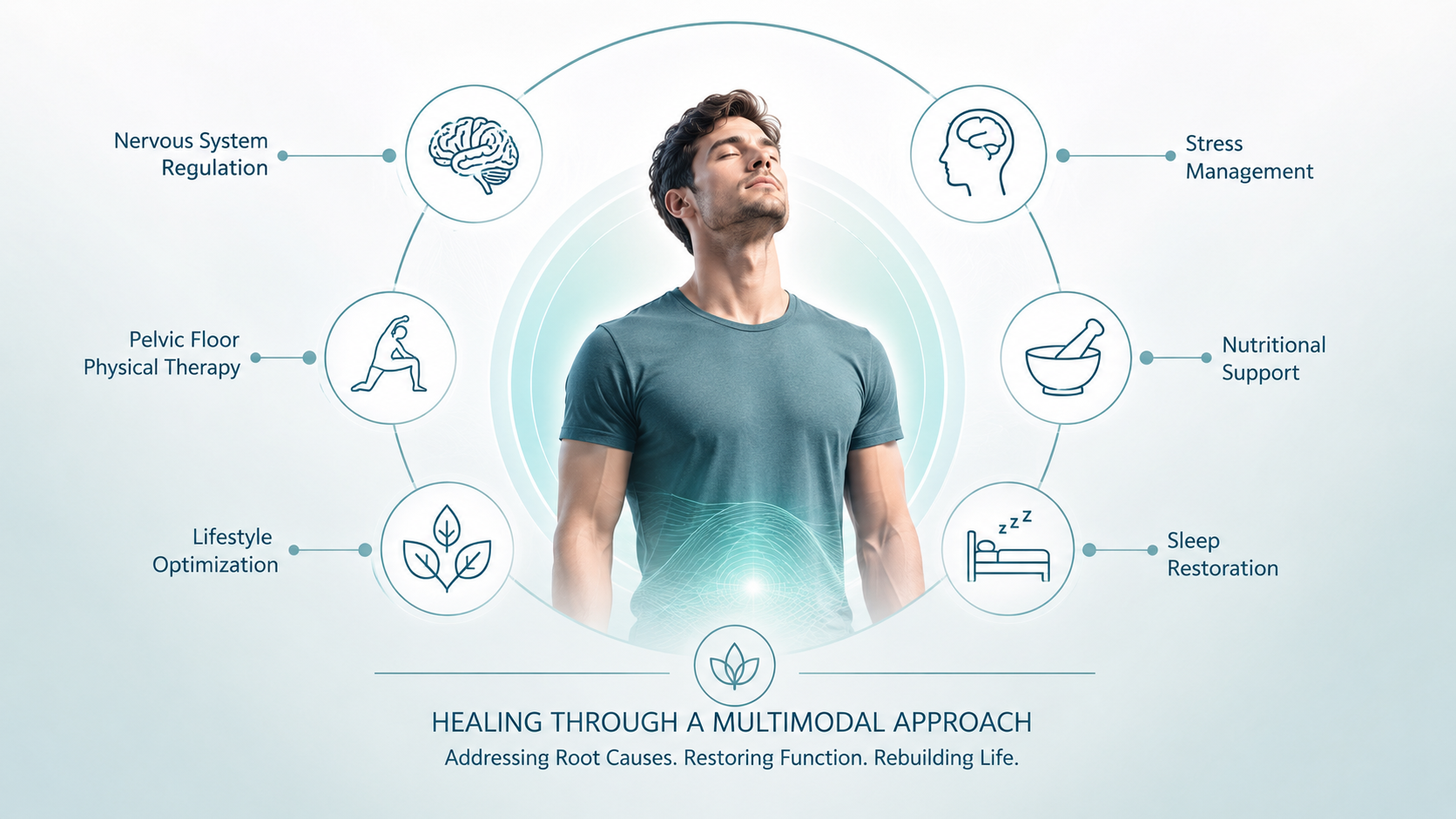
Why Recovery Requires a Multimodal Approach
One reason HFS recovery can be challenging is because the condition often involves several interconnected systems simultaneously. In many cases, there is no single structural injury that can simply be “fixed” with one treatment.
Instead, recovery usually requires addressing:
- Pelvic floor dysfunction
- Nervous system dysregulation
- Chronic muscular tension
- Stress and anxiety
- Lifestyle factors
- Movement and posture patterns
This is why many individuals who focus only on one aspect of the condition may experience limited progress. Lasting improvement often comes from targeting the entire cycle maintaining the symptoms.
Pelvic Floor Relaxation and Rehabilitation
Pelvic floor dysfunction is widely considered one of the central components of HFS. Many individuals with the condition exhibit the signs if chronic pelvic floor tightness or overactivity.
As a result, pelvic floor rehabilitation is commonly viewed as one of the most important aspects of recovery.
This may include:
- Pelvic floor physical therapy
- Relaxation-based breathing exercises
- Stretching and mobility work
- Trigger point release techniques
- Reducing subconscious pelvic clenching
People often search for this as:
- “Best pelvic floor exercises for hard flaccid”
- “Can pelvic floor therapy help HFS?”
- “How to relax pelvic floor muscles naturally”
Importantly, many experts emphasize that HFS is often associated with an overactive pelvic floor rather than weakness. Because of this, excessive strengthening exercises may sometimes worsen symptoms if relaxation is neglected.
Nervous System Regulation and Stress Reduction
One of the most overlooked parts of hard flaccid recovery is the role of the nervous system. Chronic stress, fear, hypervigilance, and constant symptom monitoring may keep the body locked in a prolonged “fight” or “flight” state.
When this occurs:
- Muscles tension increases
- Pelvic muscles remain guarded
- Blood flow regulation may become impaired
- Pain sensitivity can rise
For many individuals, nervous system regulation becomes a major turning point in recovery.
Helpful strategies may include:
- Improving sleep quality
- Stress management
- Mindfulness practices
- Gentle exercise
- Reducing obsessive symptom checking
- limiting excessive online searching
This does not mean the condition is purely psychological. Rather, it recognizes that the nervous system directly influences muscle tone, circulation, and pain perception.
Lifestyle Changes That May Support Recovery
Lifestyle factors can significantly influence symptom severity and recovery progress. In many cases, small daily habits contribute to ongoing pelvic tension without the individual realizing it.
Commonly recommended adjustments include:
- Avoiding Aggressive masturbation or edging
- Reducing prolonged sitting
- Improving posture and movement patterns
- Avoiding unnecessary straining
- Managing constipation
- Maintaining regular physical activity
Sufferers often search online for:
- “How to heal hard flaccid naturally”
- “Lifestyle changes for HFS recovery”
- “What makes hard flaccid worse?”
Recovery usually involves reducing behaviors that continually irritate or overload the pelvic region while supporting the body’s ability to relax and recover.
Exercise and Physical Activity During Recovery
Many individuals with HFS becomes fearful of movement and exercise after symptoms begin. While certain activities may aggravate symptoms temporarily, complete inactivity can also contribute to worsening muscular tension and deconditioning.
the goal is usually to find balanced movement that supports circulation, mobility, and nervous system regulation without excessive pelvic strain.
Activities often tolerated better include:
- Walking
- Gentle mobility work
- Light stretching
- Controlled strength training
- Breathing-focused exercises
Some individuals may temporarily need to reduce activities that heavily load the pelvic floor, such as excessive heavy lifting or intense abdominal straining.
Psychological Recovery and Fear Reduction
The psychological burden of HFS is frequently underestimated. Many sufferers experience:
- Fear about permanent damage
- Sexual performance anxiety
- Depression
- Constant monitoring of symptoms
- Loss of confidence
This emotional stress can unintentionally reinforce the physical aspects of the condition.
An important part of recovery involves gradually reducing fear surrounding symptoms and rebuilding trust in the body. Individuals who remain trapped in cycles of panic and catastrophic thinking often experience greater nervous system sensitization and muscle guarding.
In many cases, recovery improves when the body no longer perceives the condition as a constant threat.
How Long Does Hard Flaccid Recovery Take ?
There is no universal timeline for HFS recovery. Some individuals improve within months, while others require longer periods of consistent rehabilitation and lifestyle adjustment.
Several factors may influence recovery speed:
- Severity of pelvic floor dysfunction
- Duration of symptoms
- Stress and anxiety levels
- Consistency with rehabilitaiton
- presence of additional pelvic pain conditions
- lifestyle habits
People frequently search for:
- “How long does hard flaccid take to heal?”
- “HFS recovery timeline”
- “Can hard flaccid heal naturally overtime?”
Recovery is rarely perfectly linear. Many individuals experience temporary flare-ups, fluctuations, or setbacks during the process. This does not necessarily mean permanent worsening or failed recovery.
Avoiding Common Recovery Mistakes
One of the most common problems in HFS recovery is constantly searching for immediate solutions or extreme treatments.
Frequent mistakes may include:
- Excessive symptoms checking
- Constant penis testing
- Overtraining the pelvic floor
- Aggressive stretching
- Panic-driven internet research
- Jumping rapidly between treatments
Because HFS often involves nervous system sensitization, fear and obsession surrounding symptoms can unintentionally reinforce the cycle.
A calmer, structured and consistent recovery approach is usually more effective than constantly chasing quick fixes.
Final Thoughts
Hard flaccid syndrome recovery is often possible, but it typically requires patience, consistency, and a broad understanding of the condition. Rather than resulting from a single isolated problem, HFS appears to involve a combination of pelvic floor dysfunction, nervous system dysregulation, stress-related muscular tension, and altered blood flow dynamics.
For many individuals, meaningful improvements occurs when recovery efforts focus on restoring pelvic relaxation, reducing nervous system hyperarousal, improving lifestyle habits, and gradually breaking the cycle maintaining the symptoms. Although recovery timelines vary, many people experience substantial improvements in symptoms and overall equality of life through a balanced and multimodal approach.