
Causes of Hard Flaccid Syndrome or What Causes Hard Flaccid Syndrome
Causes of Hard Flaccid Syndrome
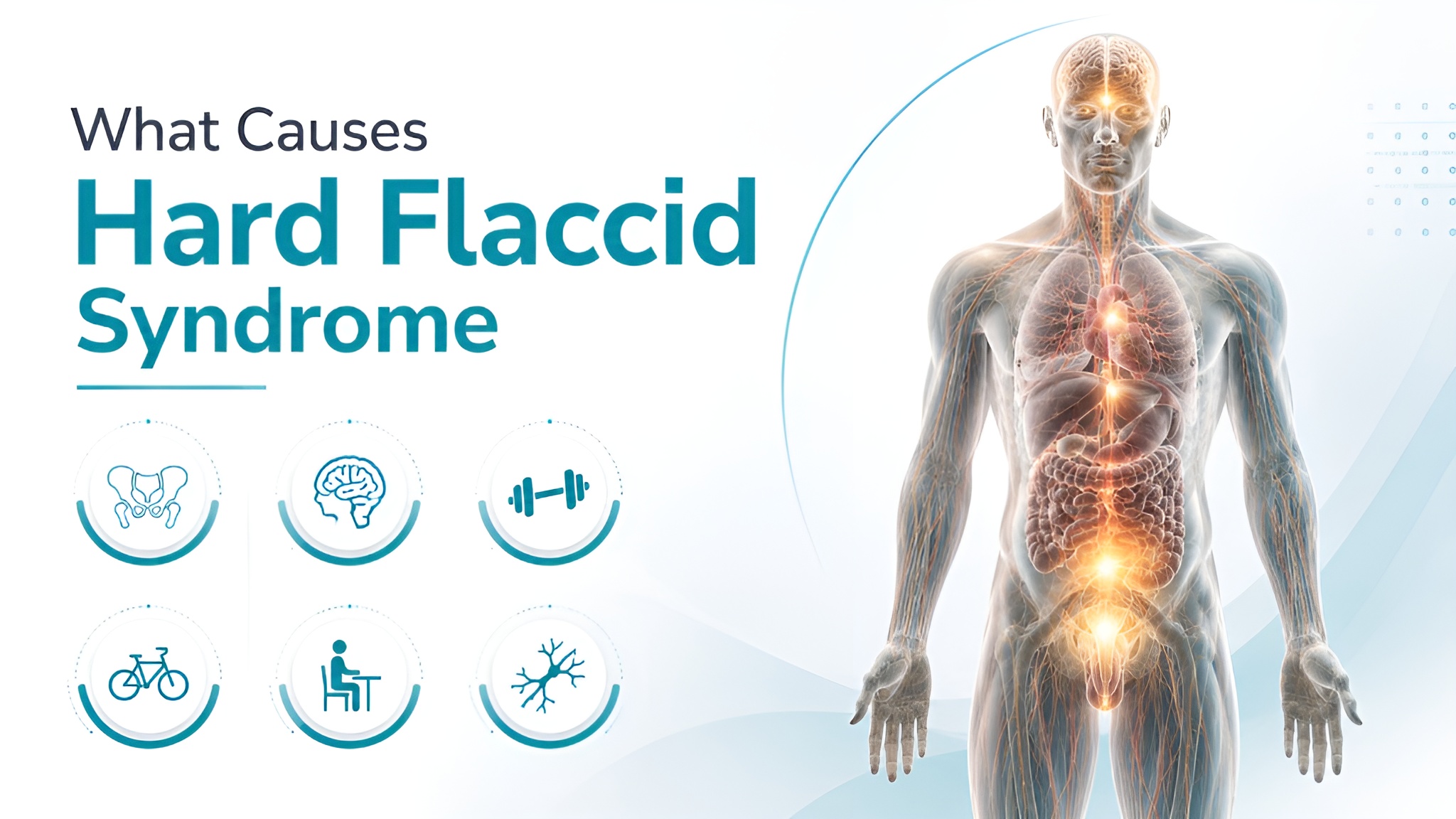
Causes of Hard Flaccid Syndrome (HFS)
While the condition remains under-researched, growing clinical discussion and patient experiences suggest that HFS is not caused by a single disease or structural abnormality. Instead, it appears to develop through a combination of physical, neurological, muscular, vascular, and psychological factors that interact with one another.
One of the most common questions men ask after developing symptoms is: “What caused my Hard Flaccid Syndrome?” In many cases, the answer is not straight forward. Some individuals notice symptoms immediately after a specific event, while others experience a gradual onset over time. Understanding the potential causes of HFS is important not only for symptom management but also for avoiding behaviors that may worsen the condition.
Is Hard Flaccid Syndrome Caused by One Specific Problem?
Current understanding suggests that HFS is multifactorial, meaning several contributing factors may be involved simultaneously. Rather than a single injury or disease process, HFS is believed to result from dysfunction affecting the pelvic floor muscles, surrounding nerves, blood flow regulation, and nervous system’s stress response.
In most cases. an initial trigger appears to set off a cycle involving pelvic floor tension, nerve irritation, and altered vascular function. Over time these changes may become self-reinforcing, particularly when accompanied by anxiety, chronic stress, or persistence focus on symptoms.
Aggressive or Prolonged Masturbation
One of the frequently reported triggers associated with HFS aggressive or excessive masturbation. Many individuals report the onset of symptoms following prolonged sexual activity. forceful stimulation, or repetitive masturbation sessions performed over extended periods.
This does not mean masturbation itself is inherently harmful. However, repetitive mechanical strain on the pelvic floor muscles and surrounding tissues may contribute to irritation and muscular overactivation in the susceptible individuals.
People commonly search for:
- “Can masturbation causes Hard Flaccid Syndrome?”
- “Hard Flaccid after Masturbation”
- “Can edging lead to HFS”
The concern surrounding Masturbation-related HFS often centers around repeated tension within the pelvic floor. During sexual stimulation and orgasm, the pelvic muscles contract intensely. Excessive repetition without adequate recovery may contribute to chronic tightness or muscular dysfunction in some individuals.
Edging and Excessive Sexual Stimulation
Edging refers to repeatedly approaching organism and intentionally stopping stimulation before climax. Many men with HFS describe a history of prolonged edging sessions prior to symptom onset.
Although direct scientific evidence remains limited, edging may contribute to sustained pelvic floor contraction and heightened nervous system activation. Repeated cycles of arousal without complete release may place prolonged stress on pelvic musculature and vascular regulation.
This is why individuals search online:
- “Hard Flaccid Syndrome from edging”
- “Does edging cause pelvic floor problems?”
- “Whi is my penis hard while flaccid after edging?”
In individuals already predisposed to pelvic floor tension or anxiety, excessive stimulation patterns may amplify muscular guarding and contribute to HFS persistence.
Pelvic Floor Muscle Dysfunction
Pelvic floor dysfunction is widely considered one of the central mechanisms involved in HFS. The pelvic floor consists of a group of muscles responsible for supporting pelvic organs and contributing to urinary, bowel, and sexual function.
In many individuals with HFS, these muscles appear to become excessively tight or overactive, a condition sometime referred to as pelvic floor hypertonicity.
A chronic tight pelvic floor may compress nerves and blood vessels in the pelvic regions, potentially disrupting normal penile relaxation and blood flow regulation. This theory helps explain why symptoms often worsen during stress, prolonged sitting, or standing for long periods.
Trauma to the Perineum or Pelvic Region
Direct physical trauma is another recognized contributing factor in some HFS cases. Injuries involved the perineum, pelvis, or lower spine may alter muscular function, irritate nerves, or disrupt normal vascular regulation.
Not all injuries need to be severe. Even relative mild trauma may trigger protective muscle guarding within the pelvic floor especially if pain or inflammation develops afterwards.
Lower Back and Nerve-Related Issues
Some individuals with HFS report concurrent lower back pain, hip dysfunction, or nerve-related symptoms. This has led clinicians and researchers to explore the possible role of nerve-related symptoms. This has led clinicians and researchers to explore the possible role pf nerve irritation, particularly involving pudendal nerve and sacral nerve pathways.
The pudendal nerve plays an important role in penile sensation and pelvic floor control. Irritation or sensitization of this nerve may contribute to:
- Numbness
- Tingling
- Cold sensation
- Altered erections
- Pelvic discomfort
Lower back dysfunction may indirectly affect pelvic muscle and nerve signaling through changes in posture, muscle balance, spinal nerve irritation.
Although HFS is not universally considered a nerve injury disorder, nerve sensitization is increasingly viewed as part of the broader picture.
Vascular and Blood Flow Changes
Another important theory involves altered penile blood flow dynamics. Men with HFS frequently describe a penis that feels firm or engorged despite lacking a true erection.
Researchers believed this may involve subtle changes in:
- Arterial inflow
- venous outflow
- smooth muscles relaxaiton
- pelvic vascular compression
This Vascular component may explain why many individuals notice:
- Worse symptoms while standing
- Improvement while lying down
- Changes in penile temperature
- partial firmness without arousal
Importantly, most individuals with HFS do not show major abnormalities on routine vascular testing. This suggests the issue may involve functional dysregulation rather than permanent structural damage.
Chronic Stress and Anxiety
Psychological stress does not mean HFS is “all in the head.” However, stress and anxiety appear to play a significant role in many cases.
The body’s stress response activates the sympathetic nervous system, commonly known as the “fight or fight” system. When this remains chronically activated, muscle tension throughout the body may increase–especially within the pelvic floor.
Many individuals notice that symptoms worsen during periods of:
- Anxiety
- panic
- hyperfocus on symptoms
- sexual performance concerns
- Emotional stress
individuals commonly include:
- “Can anxiety cause hard flaccid syndrome?”
- “Stress-related hard flaccid”
- “Pelvic floor tension and anxiety”
Over time, anxiety and symptom monitoring may reinforce muscular tension and nervous system sensitization, creating a cycle that becomes difficult to break.
Sedentary Lifestyle and Poor Posture
Although less commonly discussed, prolonged sitting and poor posture may contribute to pelvic dysfunction in some individuals.
Extended sitting may increase pressure on:
- The pelvic floor
- Pudendal nerve pathways
- perineal tissue
Poor posture, weak core muscles, and hip dysfunction may also alter pelvic mechanics and muscular balance.
while these factors alone may not directly cause HFS, they can contribute to an environment that promotes pelvic tension and reduced mobility.
Can Multiple Factors Cause HFS at the Same Time?
In many cases yes, HFS rarely develops from a single isolated factor. More commonly, several contributing elements interact together.
For example, one individual may symptoms after:
- Excessive edging
- Chronic anxiety
- Tight pelvic floor muscles
- Long hours of sitting
Another person develops symptoms following:
- A minor pelvic injury
- Stress-induced muscle tension
- Persistent nervous system hyperarousal
This expires why HFS experiences can vary significantly between individuals and why treatment often requires a multimodal approach.
Understanding the Bigger Picture
One of the most important concepts in HFS is that symptoms often become self-perpetuating. An initial trigger may lead to pelvic floor tightness, which then affects nerves and blood flow. Persistent symptoms can increase stress and anxiety, further intensifying muscular tension and nervous system activation.
Understanding this relationship is important because it shifts the focus away from searching for a single catastrophic injury and towards addressing the broader functional dysfunction involved.
Final Thought
Hard Flaccid Syndrome remains a poorly understood condition, but current evidence suggests that it is driven by interconnected muscular, neurological, vascular, and psychological factors rather than a single structural abnormality. Common triggers aggressive sexual activity, edging, pelvic trauma, chronic stress, pelvic floor dysfunction, and nerve irritation.
When the exact mechanisms continue to be studied, many experts now view HFS as a functional disorder involving pelvic floor overactivity and nervous system dysregulation. Because symptoms and contributing factors vary between individuals, understanding the possible cases of HFS is an important first step toward developing an affective and individualized recovery approach